Intent
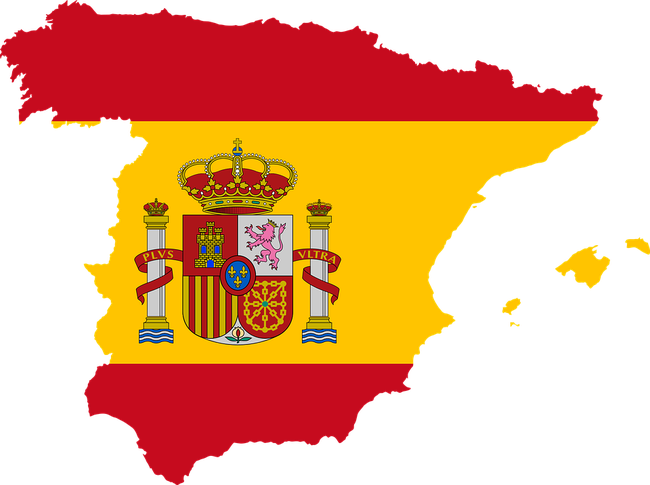
Market Drayton Junior School believes that the learning of a foreign language provides a valuable educational, social and cultural experience for the pupils and is keen to promote the introduction of a Modern Foreign Language to all pupils of primary age. Spanish will be taught throughout Key Stage 2 in order to enable pupils to make substantial progress in one language.
Our Values in MFL
Collaboration |
Respect |
|
|
Aspirations |
Positivity |
|
|
In MFL we want children to

Market Drayton Junior School’s aim is that all pupils will develop a genuine interest and positive curiosity about foreign languages, predominantly Spanish. Learning a second language will offer pupils the opportunity to explore relationships between language and identity, develop a deeper understanding of other cultures and the world around them with a better awareness of self, key individuals and cultural differences. The intention is that pupils will feel able and encouraged to continue studying languages beyond key stage 2 and ultimately be working towards becoming life-long language learners.
Implementation
How do we deliver the MFL curriculum?
In Years 3 and 4, language will be delivered weekly by the class teacher. In Years 5 and 6, the children will receive 40 minutes of Spanish per week during PPA sessions delivered by a Spanish-speaking Higher Level Teaching Assistant. This will be supplemented with incidental language opportunities throughout the week by the class teacher, whole-school and classroom displays as well as celebratory language days, including European Day of Languages.
Teaching is based on the Hola Espanol scheme of work. All units of work have been written to present ideas and activities to engage interest, promote confidence and encourage communication in Spanish. They support a range of learning styles through sounds, videos, activities, games, images, songs, spoken text and, of course, written words and phrases.
The four key language learning skills taught are:
- listening
- speaking
- reading
- writing
These are covered in an age-appropriate way across Key Stage 2. This will enable pupils to use and apply their learning in a variety of contexts, laying down solid foundations for future language learning.
The following topics are covered:
SPANISH – linked to Hola Espanol units
|
|||
| AUTUMN | SPRING | SUMMER | |
| (Y2) | Greetings | Numbers to 10 | Colours |
| A(Y3) | Let’s start!Countries that speak SpanishClassroom instructionsGreetingsNavidad – Christmas | What is your name?ABC – Spanish alphabetColours – Pablo PicassoWhere do you live?Numbers 0-15Numbers 16-31 | Days of the weekMonths of the yearThe four seasonsWhat is the date?Recap and review |
| B (Y4) | How old are you?Happy birthday!Parts of the headParts of the bodyNavidad – Christmas | The familyNumbers to 100Do you have any pets?Wild animalsAdjectives for animals | On the farmClassroom objectsIn the classroomRecap and review |
| C (Y5) | Recap previous learningGoing to the zoo/Habitats2D shapesMeasurementsNavidad – Christmas | FruitVegetablesGoing to the doctorTimeMusical instruments | Going shoppingFood and drinkClothesPlantsRecap and review |
| D (Y6) | Recap previous learningWeatherJobs3d shapesNavidad – Christmas | Describing peopleSports and hobbiesIn the townAsking directions | TransportMapsPlanetsRecap and review |
[/wpcp_useyourdrive]
Special Education Needs and MFL
How do we ensure all children can access Spanish lessons?
Spanish is taught using a range of strategies to support children with SEND. These include adopting a multisensory approach, engaging kinaesthetic as well as visual and auditory learning styles; presenting subject matter in a structured and explicit manner; dividing lessons into digestible “bite-size chunks” with slower learning steps; providing opportunities for “over-learning” key points through a variety of follow-up activities; deploying memory strategies to assist vocabulary and grammar retention; making allowances for shorter concentration spans; showing sensitivity when eliciting student responses; encouraging metacognitive – “learning how to learn” – strategies and thinking skills to promote student autonomy; and dispensing praise and rewards to maintain motivation and self-esteem.
Links to other subjects
Where appropriate the teaching of MFL is linked to other curriculum areas. Here are some of the ways we link MFL to other subjects:
Subject |
How MFL may be linked |
| English | The vocabulary, grammar and phonics of each new unit is linked back to previous Spanish learning, or to learning in English. For example, the use of the question mark in Spanish is different to English. Comparisons can be made. This enables children to make links. |
| Art | Year 5 focus on Spanish artist Picasso’s portraiture, embellishments inspired by traditional French interiors in Year 4. |
| Geography | Locating Spain, and places within Spain on the map as part of MFL; Y3 focus on Spain in the topic ‘Exploring Spain’; European Day of Languages involves each class focusing on a different European country. |
| PSHE | Respecting identity and diversity; similarities and differences. |
| Science | Parts of the body, animals. |
Impact
Through the high quality first teaching of Spanish taking place we will see the impact of the subject in the following ways:
- Children will become aware that a language has a structure, and that the structure differs from one language to another.
- Children will develop their language and communication through development of the four key skills of speaking, listening, reading and writing.
- Children will enrich their language learning by developing an understanding of the Spanish culture.
- Children will transfer to KS3 effectively and successfully and will be well prepared to continue and develop their language skills.
Displays showing our learning
[/wpcp_useyourdrive]